
San Jose vs. Santa Clara - Same Valley, Different Termite Risk
- Oct 22, 2026
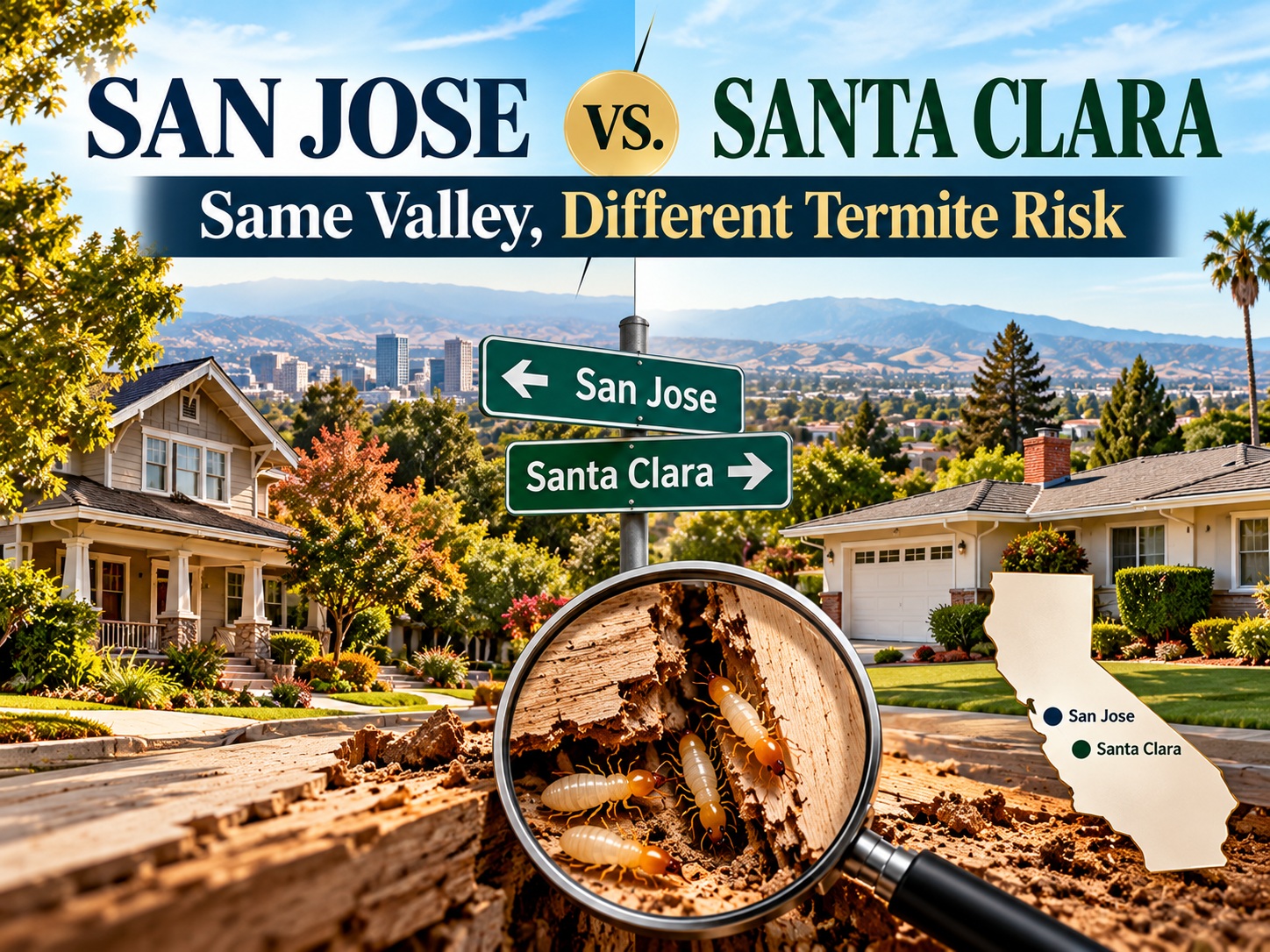 Drive from Santa Clara into San Jose, and you probably won't notice where one city ends and the other begins. Termites won't either. Both cities sit on the same valley floor, share the same weather, and deal with the same termite species.
So why can two homes a few miles apart need very different termite plans? The answer is in the houses, the ground they sit on, and the neighbourhoods around them. Let’s take a look at why the same valley with the same climate faces different termite problems.
San Jose - One City, Many Risk Zones
San Jose covers about 178 square miles of land. That's room for very different kinds of homes, and each has its own weak spots.
- Historic Core Homes: Naglee Park was split into lots in 1902, and many of its homes went up in the early 1900s. Old wood and raised foundations mean more than a century of exposure.
- Creekside Neighbourhoods: Willow Glen takes its name from the willows along the Guadalupe River, and Naglee Park borders Coyote Creek. Damp soil near water is exactly what subterranean termites like.
- Hillside and Newer Areas: Evergreen and Almaden have newer homes on rolling hills. Newer doesn't mean safe. Wood fences, heavy landscaping, and nearby open space all give termites a way in.
In San Jose, your neighbourhood matters as much as your house.
Also Read: Why Does Location Matter for Termite Treatment in the Bay Area?
Santa Clara - Compact and Mid-Century
Santa Clara is much smaller and more uniform. The typical home was built around 1974, and about 38% of the city's housing went up in the 1950s and 1960s alone.
- Aging Tract Homes: Neighborhoods like Westwood were built in the early 1950s, with around 660 homes on raised foundations. That's 70 years of wear on framing and crawl spaces, plus decades of remodels that can hide old damage.
- The Old Quad: Victorian, Craftsman, and Mission-style homes near Santa Clara University carry the same old-wood concerns as San Jose's historic core.
- Lots of Shared Walls: Nearly 23% of the city's homes are in buildings with 50 or more units. When walls are shared, one unit's termite problem can quickly become a neighbor's.
In Santa Clara, your home's age matters more than its address.
Side-by-Side Comparison
Factor | San Jose | Santa Clara |
City size | About 178 square miles, very mixed | Compact and more uniform |
Typical homes | Early 1900s homes to newer hillside builds | Mostly 1950s and 1960s tract homes |
Main termite concern | Damp soil near creeks and old wood in historic areas | Aging framing and crawl spaces |
Spots to watch | Crawl spaces, creekside yards, fences, landscaping | Crawl spaces, attics, old additions, shared walls |
What drives your risk | Where you live | How old your home is |
Know Your Home's Real Risk
Whether you live in a Willow Glen Craftsman or a Santa Clara ranch home, a generic inspection won't cut it. Hi-Tech Termite Control has protected Bay Area homes for over 20 years. Our inspectors know these neighbourhoods, their housing, and where termites like to hide.
Schedule your free termite inspection today. Call (888) 322-8889 or request a free estimate online.
Frequently Asked Questions
1. Why can termite risk differ between San Jose and Santa Clara?
Termite risk depends on factors such as building age, wood-to-soil contact, moisture, crawl-space conditions, landscaping, and previous termite activity. These property-level differences can matter more than the city boundary.
2. Are older homes in San Jose more vulnerable to termite damage?
Older San Jose homes may have aging wood, raised foundations, and previous repairs that conceal termite damage. However, a home's age alone does not determine risk. Moisture conditions, maintenance, and past treatment history also matter.
3. What should Santa Clara homeowners inspect for termites in mid-century homes?
Check crawl spaces, exposed framing, wooden additions, and areas where plumbing leaks or dampness may occur. Look for mud tubes, damaged or hollow-sounding wood, discarded wings, and signs of previous repairs that may warrant closer inspection.
4. Does living near a creek increase the risk of subterranean termites?
Moist soil near creeks can create favourable conditions for subterranean termites, which need moisture to survive. However, proximity to a creek does not automatically mean a home is infested. Drainage, foundation conditions, and access to wood are also important.
5. Can landscaping and wooden fences attract termites to a home?
Wooden fences, untreated timber, and dense landscaping can provide potential termite food sources or conceal activity near a building. Keep soil and mulch from covering siding, avoid direct wood-to-soil contact where possible, and address drainage problems around the foundation.
6. How often should homeowners in San Jose and Santa Clara schedule termite inspections?
Inspection frequency depends on the property's condition, previous termite activity, treatment history, and the terms of any existing warranty. Homeowners who notice mud tubes, damaged wood, or discarded wings should arrange a professional inspection rather than waiting for a routine check.
7. Where can homeowners arrange termite inspections in San Jose or Santa Clara?
Homeowners can contact Hi-Tech Termite Control to enquire about a property inspection in either city. Visit the company's pages for termite treatment in San Jose and termite treatment in Santa Clara, or request a free estimate.