
Who's Responsible? Termite Inspections in HOA and Multi-Unit Properties
- Aug 19, 2026
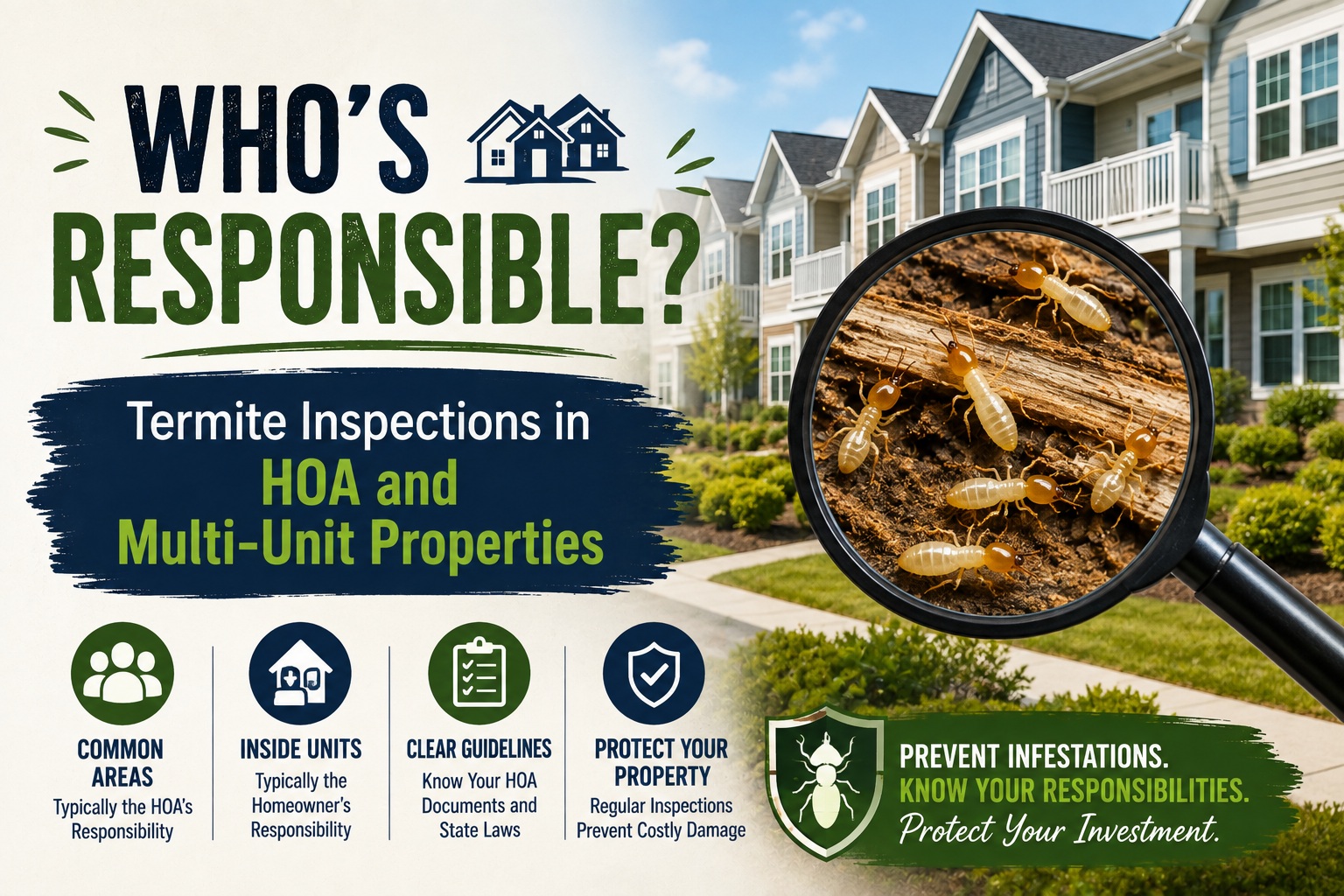 If you own a condo, town home, or unit in a multi-family building anywhere in the Bay Area, a termite problem raises a question that single-family homeowners rarely think about: Whose job is it to fix this? Is it the HOA's responsibility, or yours? The answer depends on what kind of property you own, what your governing documents say, and where exactly the termites are found.
Who Pays by Property Type
Homeowners’ associations in California operate under the Davis-Stirling Common Interest Development Act. These rules apply by default. If your association's Covenants, Conditions, and Restrictions spell out something different, the CC&Rs generally control.
Here's how responsibility typically breaks down:
Property Type | Common-Area Termite Damage | Unit Interior Damage |
Condominium | HOA repairs common-area damage (walls, roofs, shared framing) unless CC&Rs say otherwise | Owner covers damage to unit interior, cabinetry, and furnishings |
Stock cooperative | HOA repairs common-area damage unless CC&Rs say otherwise | Owner covers damage inside their unit |
Community apartment project | HOA repairs common-area damage unless CC&Rs say otherwise | Owner covers damage inside their unit |
Planned development (detached or townhome-style) | Each owner is responsible for their own separate interest, unless the CC&Rs set up a different scheme | Owner covers damage inside and to their structure |
Also Read: Are You Buying a Home? Make Sure to Get a Detailed Pre-Purchase Inspection Done
What HOA Boards Should Do
- Schedule annual inspections for all common-area structures, not just after a complaint comes in.
- Keep inspection and treatment records on file; they matter for budgeting, resale disclosures, and legal disputes.
- Review the CC&Rs for termite-related provisions before a claim arises, not during one.
- Get a written scope of work that specifies exactly which areas are covered under any treatment or warranty plan.
What Individual Owners Should Do
- Report signs of termites (mud tubes, discarded wings, hollow-sounding wood) to the HOA in writing right away.
- Ask the board for a copy of the last community-wide termite inspection report.
- Get your own unit inspected periodically, especially before buying or selling.
- Understand what your homeowner's policy does and doesn't cover; termite damage is typically excluded.
The Takeaway
Termite responsibility in HOA and multi-unit properties is governed by specific rules in the CC&Rs and the state Civil Code. Therefore, whether you serve on the board or simply own a unit, a professional inspection is the best way to ensure that a small problem doesn’t become a costly dispute.
Frequently Asked Questions
1. Who is responsible for termite damage in an HOA property?
Responsibility depends on the property type and the HOA's governing documents, including its CC&Rs. Common-area damage is often handled by the HOA, while damage within an individual unit may be the owner's responsibility.
2. Does an HOA have to pay for termite inspections?
An HOA may be responsible for inspecting and maintaining common areas, but the exact obligation depends on the governing documents and applicable California law. HOA boards should review their CC&Rs before deciding who is responsible for a particular inspection or treatment.
3. Should condo owners get their own termite inspection?
Yes, an individual inspection can be useful because a community-wide inspection may not cover every accessible area inside a unit. A professional inspection can help identify activity before it develops into more extensive damage.
4. What should an HOA do if termites are found?
The HOA should document the finding, review the CC&Rs, determine whether the affected area is common or individually owned, and obtain a professional inspection and written treatment recommendation. Keeping detailed inspection and treatment records is also important.
5. Does homeowners insurance cover termite damage in a condo or town home?
Termite damage is generally excluded from standard homeowners’ insurance because it is typically considered a maintenance or preventable pest issue. Owners should review their individual policy and HOA insurance documents for the specific coverage that applies.
6. Where can HOAs get termite inspections in the Bay Area?
HOA boards and property owners looking for termite inspection in the Bay Area can work with a qualified termite control professional to assess common areas, accessible structural components, and potential moisture or entry points.