
Smart Outdoor Maintenance: The Monthly Outdoor Checks Most Homeowners Never Think About (But Probably Should)
- Mar 19, 2026
Most termite prevention advice sounds the same.
Clean the gutters.
Move the firewood.
Trim bushes away from the house.
All good advice, sure. Discussed often.
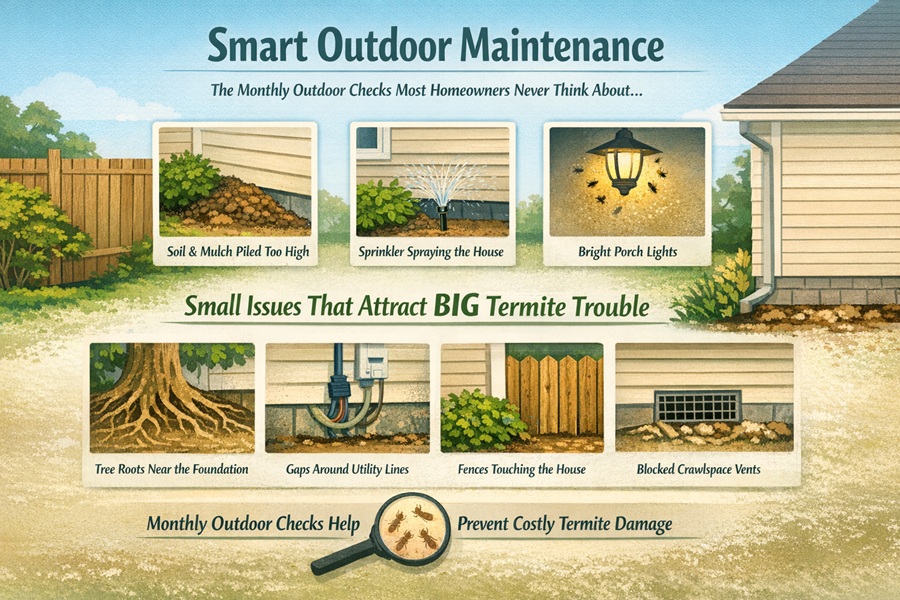
But sometimes termite issues start in places that don’t make it onto standard homeowner checklists. A sprinkler is spraying a wall. Soil is slowly creeping up the siding. A fence has been touching the house for years without anyone noticing.
None of those feels like an urgent problem. Until suddenly they are.
Also, many infestations start because of small outdoor conditions that quietly develop over time.
Why Subtle Outdoor Changes Matter More Than You Think
Termites aren’t random invaders. They respond to environments.
Give them the right conditions-moisture, soil access, and hidden wood-and they’ll happily settle nearby. Termite experts sometimes call these environments “micro-habitats”.
Think of them as tiny pockets where everything termites need suddenly exists:
- Slightly higher humidity
- Protected soil
- Nearby cellulose (wood, roots, mulch)
- Shade and limited airflow
The problem is that many of these conditions develop slowly outside a house, and they don’t look dangerous at first glance.
Which is why a quick monthly walk around the yard can reveal issues long before termites ever show up.
1. Soil Slowly Rising Against the House
When homes are built, builders typically leave a visible strip of foundation between the soil and siding. It acts like a protective barrier.
But over time, after landscaping projects, heavy rains, and years of adding mulch, the soil level can creep upward.
No one notices. Until termites suddenly have a direct bridge.
Subterranean termites normally build mud tubes to travel from soil to wood. But when the soil sits too high, they don’t even need tubes.
They just walk right in.
What to Check Once a Month
Take a slow walk around the house and look for:
- Soil piled against the siding
- Raised garden beds touching walls
- Mulch stacked high against the foundation
- Dirt covering foundation vents
A Simple Rule
You should be able to see 6–8 inches of foundation between the soil and siding.
If you can’t, it’s worth fixing.
2. Sprinklers That Quietly Soak the House
Sprinkler systems are great-until they’re not.
One of the most common things termite professionals notice during inspections is irrigation spray hitting siding or foundations.
And it usually happens because landscaping has changed: plants grow, sprinkler heads shift, and nobody adjusts them.
Now the house gets sprayed twice a day.
Constant moisture does two things:
- It softens wood and siding
- It keeps soil damp near the foundation
Both are termite magnets.
Quick Monthly Check
Turn on your irrigation system and watch what happens.
Look for:
- Water spraying the house
- Overspray onto decks
- Damp soil hugging the foundation
- Puddles forming near walls
It’s a small fix-just adjust the spray angle-but it can remove one of the most common termite attractants.
3. Outdoor Lights That Invite Termites
Termites swarm during certain seasons, usually when colonies release winged reproductive termites. And those swarmers are very attracted to light.
Especially bright white or fluorescent lighting.
So, if your porch light shines directly above your front door or garage, that is where the swarmers will gather.
What to Check
Look at the outdoor lighting near:
- Entry doors
- Garages
- Patios
- Porch ceilings
An Easy Adjustment
Switching to yellow “bug lights” or warm LEDs can reduce insect attraction significantly.
4. Tree Roots Acting Like Underground Highways
Large trees near homes look great. But their root systems can sometimes create unexpected termite pathways.
Roots grow toward moisture, often toward foundations where soil stays slightly damp. As roots expand, they create small underground channels.
Termites follow these channels.
Dead roots are even more appealing because they become food sources.
Monthly Yard Check
Look for:
- Large trees within about 15 feet of the home
- Exposed roots near the foundation
- Rotting stumps or old root systems
- Soil cracking from root expansion
It doesn’t mean every tree is a problem. But decaying roots near structures are worth addressing.
5. Tiny Utility Gaps No One Notices
Houses are full of little entry points where utilities pass through walls.
Cable lines. Internet wiring. AC conduits. Irrigation pipes.
These openings are usually sealed during construction, but over time, the sealant cracks or shrinks.
That’s all termites need.
Check Around
- Outdoor electrical boxes
- Air conditioning lines
- Irrigation systems
- Cable and internet connections
If you see gaps, cracked sealant, or open holes, resealing them with exterior caulk is a quick and effective fix.
6. Deck Ledger Boards
Decks attach to homes through something called a ledger board, which is basically the structural board connecting the deck frame to the house.
The issue is that moisture often collects behind this board, especially if flashing fails.
And when moisture sits there long enough, termites notice.
Monthly Inspection Tips
Look for:
- Softwood near the deck attachment
- Rusted flashing
- Dark water stains
- Areas where wood looks swollen or damaged
It’s one of those areas homeowners rarely check, but pest inspectors always do.
7. Mulch That’s Just a Little Too Thick
Mulch makes landscaping look tidy. It helps retain moisture for plants.
But thick mulch layers create something termites absolutely love: warm, humid environments close to the house.
As mulch decomposes, it generates heat and moisture-conditions that resemble termite nesting zones.
The Common Mistake
Many homeowners pile mulch 4–6 inches deep, especially in spring.
A Safer Approach
Keep mulch around 2 inches deep near the foundation and leave a small gap between the mulch and the wall.
Your plants will still thrive. Termites will be less interested.
8. Fences Touching the House
A wooden fence connected directly to the side of a house creates a perfect termite bridge.
Termites often infest fences first because the wood sits directly in the soil. From there, they slowly move toward the structure.
What to Look For
- Fence boards touching siding
- Wooden fence posts close to the foundation
- Rotting fence wood
Simple Fix
Create a small separation or use metal brackets where fences meet homes.
It breaks the pathway.
9. Crawl space Vents That Quietly Stop Working
Crawl spaces are already moisture-prone environments.
But when exterior vents get blocked by soil, plants, or debris, humidity inside the crawl space rises dramatically.
Termites thrive in that environment.
Monthly Vent Check
Make sure vents are:
- Visible and unobstructed
- Not buried by landscaping
- Protected by intact screens
Good airflow keeps crawlspaces dry.
Dry crawl spaces discourage termites.
10. Watching How Rainwater Actually Moves in Your Yard
This might be the simplest and most overlooked inspection homeowners can do.
Just watch what happens after it rains.
After a Storm, Look For:
- Standing water near foundations
- Soggy soil that stays wet for days
- Puddles near patios or decks
- Water flowing toward the house
Those spots can become perfect nesting zones for subterranean termites.
If you notice consistent pooling, drainage improvements like French drains or grading adjustments can make a huge difference.
HiTech Termite Control
A few minutes of outdoor observation each month can prevent problems that might otherwise cost thousands to repair later. Termites thrive when small risks go unnoticed, but the right preventive steps, along with professional inspections, make a huge difference. If you want peace of mind, our termite control experts are here to help with thorough inspections and proven protection solutions. Reach out today and let our team help keep your home safe, strong, and termite-free. Visit our site here.
Frequently Asked Questions
What outdoor conditions attract termites the most?
Termites are primarily attracted to moist soil, wood near the ground, and protected outdoor environments. Common risk factors include irrigation overspray, thick mulch near foundations, wood fencing touching the home, and soil build up against siding.
Can sprinkler systems cause termite problems?
Yes. Sprinklers that regularly spray siding or foundations keep soil damp and can soften exterior wood, creating ideal conditions for subterranean termites.
Adjusting sprinkler direction is a simple prevention step.
Why does mulch sometimes attract termites?
Mulch retains moisture and produces heat as it decomposes. Thick mulch layers near structures can create environments similar to termite nesting areas.
Keeping mulch shallow and slightly away from foundations helps reduce risk.
Do outdoor lights attract termites?
During swarm season, termite swarmers are attracted to bright lights. Lights near doors or windows may cause swarmers to gather near homes and potentially establish colonies nearby.
Yellow bug lights reduce insect attraction.
How often should homeowners inspect their yard for termite risks?
A quick walk around the property once a month is usually enough to catch developing risks. Seasonal changes in landscaping, irrigation, and soil movement can create new termite-friendly conditions over time.
Annual professional termite inspections are also recommended.