
Why Termites Often Infest Outbuildings (Sheds, Decks, Fences) Before Entering Your Home
- Feb 18, 2026
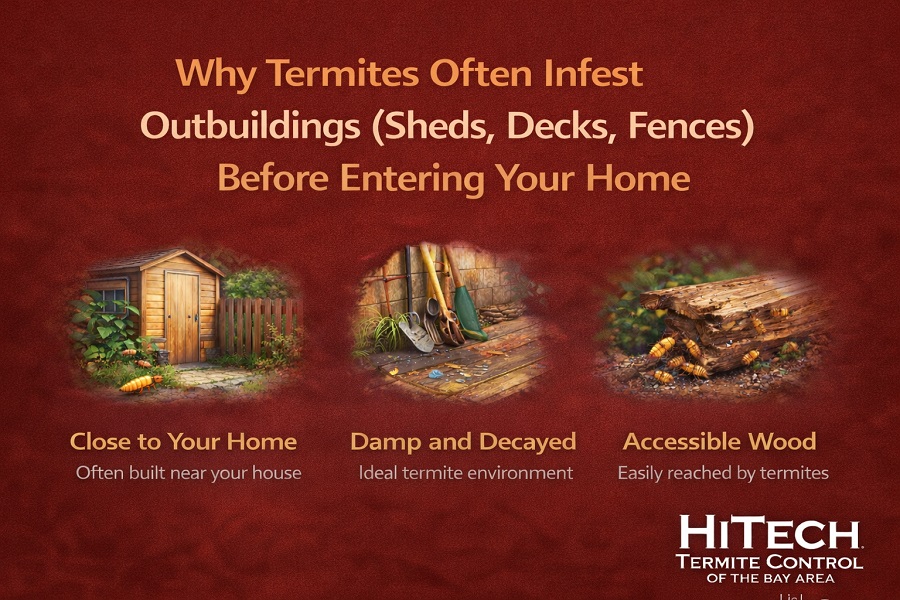 Termites are quietly destructive pests responsible for billions of dollars in property damage nationwide. Termite species that invade homes and structures target human-made wood sources, and they don’t always start inside your house. Many infest outbuildings and exterior wooden structures like sheds, decks, fences, and wood piles first, before ever making their way into living spaces.
Reasons Why Termites Often Infest Sheds, Decks, and Fences Before Entering the House
1. These Structures Are Ideally Placed
Termites need wood + moisture + soil contact to thrive.
- Outbuildings like sheds and fences often sit directly on the ground, providing ideal soil contact and increasing termite risk.
- Deck supports and fence posts are mostly set into the earth, giving termites continuous access to food (wood) and moisture.
Subterranean termites build underground tunnels and scout outward from the colony in search of food. If the closest wood is a deck post or a shed wall, that’s where they’ll start.
2. Outbuildings Provide Less-Disturbed, Low-Traffic Habitat
Inside your living areas, humans move, light changes, doors open, and temperatures fluctuate - conditions termites avoid when possible.
But in a shed, deck joists, fence line, or wood pile, termites find:
- Quiet, undisturbed wood
- Stable temperatures
- Protected environments with soil moisture
They can chew away entirely inside wooden boards and beams without detection for months or even years.
Many homeowners never check these structures until damage is visible.
3. Storing Firewood or Lumber Near Sheds or Decks
Firewood stacks, pallets, and leftover lumber absorb moisture from the ground and become a secondary termite colony hub.
When these woodpiles sit:
- beside a shed,
- under a deck, or,
- along a fence line,
Termites can establish a feeding zone and then spread into structural wood.
Tip: Store firewood at least 15–20 feet away and elevate it using a rack or concrete pavers.
4. Mulch Piled Too High Near Structures
Mulch itself isn’t food for subterranean termites, but it locks in moisture, and termites absolutely love moist soil.
When mulch is piled:
- against shed walls,
- around deck posts, or,
- at the base of fences,
It creates a humid layer of soft, damp ground where termites can build tunnels undisturbed.
This gives termites a moisture-rich bridge straight into exterior wood.
Also Read: How Landscaping Choices Can Accidentally Invite Termites into Your Home
5. Tree Branches and Shrubs Touching Outbuildings
Plants touching outdoor structures create shady pockets where moisture lingers and airflow drops - two conditions termites prefer.
Overgrown shrubs or low-hanging branches:
- Trap moisture around shed walls
- Hide mud tubes
- Make inspections harder
- Allow termites to stay protected from sunlight
Tip: Regular trimming is one of the simplest, most overlooked termite prevention steps.
6. Irrigation Systems Spraying Structural Wood
Sprinkler systems often overspray:
- Fence lines
- Deck posts
- Shed bases
Constant wetting causes wood to soften and rot, which accelerates termite feeding. Termites gravitate to damp wood because it’s easier to chew and digest.
Tip: Reposition sprinklers so they water the soil, not structures.
7. Soil Grading That Slopes Toward Outbuildings
Poor drainage funnels water toward structures.
If water pools:
- around fence posts,
- under-deck footings, or
- along the base of a shed,
The resulting damp soil becomes prime termite real estate.
Tip: Fix this by grading soil away from buildings or adding gravel drainage channels.
8. Dense Planting Beds Against Wood Structures
Thick flowerbeds or hedges right against:
- decks,
- sheds, or
- backyard studios,
Trap humidity and block sunlight. Termites avoid light and heat, so shaded, moist conditions become their safest access point into wood.
9. Geography Matters
Termite activity in the U.S. is widespread (found in every state except Alaska), but warmer, wetter regions like the Southeast experience higher infestation pressure.
If you live in a humid climate, every outbuilding is more likely to harbor termite activity before the house.
Also Read: Subterranean Termites Cause 95 percent Structural Damages in the US - Study Says
Proven Ways to Prevent Termite Infestations
The best defense is prevention and smart maintenance, which can shield sheds, decks, and fences from termites.
Here’s how:
1. Eliminate Wood-to-Soil Contact
These include:
- Raising sheds on concrete piers
- Installing deck footings that avoid direct soil contact
- Using metal post anchors for fences
Even a few inches of separation make it harder for termites to access wood.
2. Control Moisture and Drainage
Fix leaks, ensure gutters divert water away from structural wood, and avoid sprinklers spraying onto decks or fence posts.
Good drainage lowers moisture and lowers termite attraction.
3. Remove Wood Debris
Firewood, lumber, cardboard, and even old pallets near buildings are termite bait. Stack wood up off the ground and away from buildings.
4. Inspect Regularly
Annual inspections by a termite professional can detect termite activity before visible damage occurs. Experts look for signs humans often miss.
5. Professional Termite Barriers and Treatments
Licensed termite control solutions like soil barriers, bait stations, and targeted treatments drastically reduce termite risk. These systems intercept termites before they enter structures.
HiTech Termite Control
Termites rarely start inside your home. They begin in sheds, decks, fences, and landscaping where wood meets soil and moisture. Once established, they quietly expand toward your house. The key is early detection and professional protection. Our expert termite control team at Hi Tech inspects your entire property, eliminates hidden colonies, and builds long-term defenses. Schedule your free estimate with us here.
Common Questions About Termites and Outbuilding Infestations
Here are fast, easy answers to questions most homeowners ask:
Can termites really start in a shed and then move into a house?
Yes. Termites investigate and feed where food is closest. If a shed is closer to their colony or easier to access than the house, it becomes their first target and often their entry point toward your home.
Will termites infest a fence?
Absolutely. Wooden fences are classic termite food if they contact soil and remain moist. From there, termites can extend tunnels toward your home.
Do termites eat old firewood and lumber?
Yes. Stored wood debris, lumber, and firewood sitting outdoors are termite magnets. These food sources attract colonies and provide easy foraging sites that termites will follow to other structures.
Should I worry if I see a few termites outside?
Yes. Worker termites outside, especially near a structure, may indicate a hidden colony nearby. Early professional inspection can prevent significant damage.
What signs indicate a termite infestation in an outbuilding?
Look for:
- Mud tubes - thin, clay-like tunnels on walls or posts.
- Rubbery or hollow wood - sounds hollow when tapped.
- Discarded wings - near doors and windows after swarming.
Can termites infest without soil contact?
Some species, like drywood termites, can live entirely inside wood without soil contact, but the most common and damaging type in the U.S. (subterranean termites) absolutely needs soil moisture and ground contact to thrive.