
Not All Termites Are the Same - Why Bay Area Location Determines Your Treatment Plan
- Sep 22, 2026
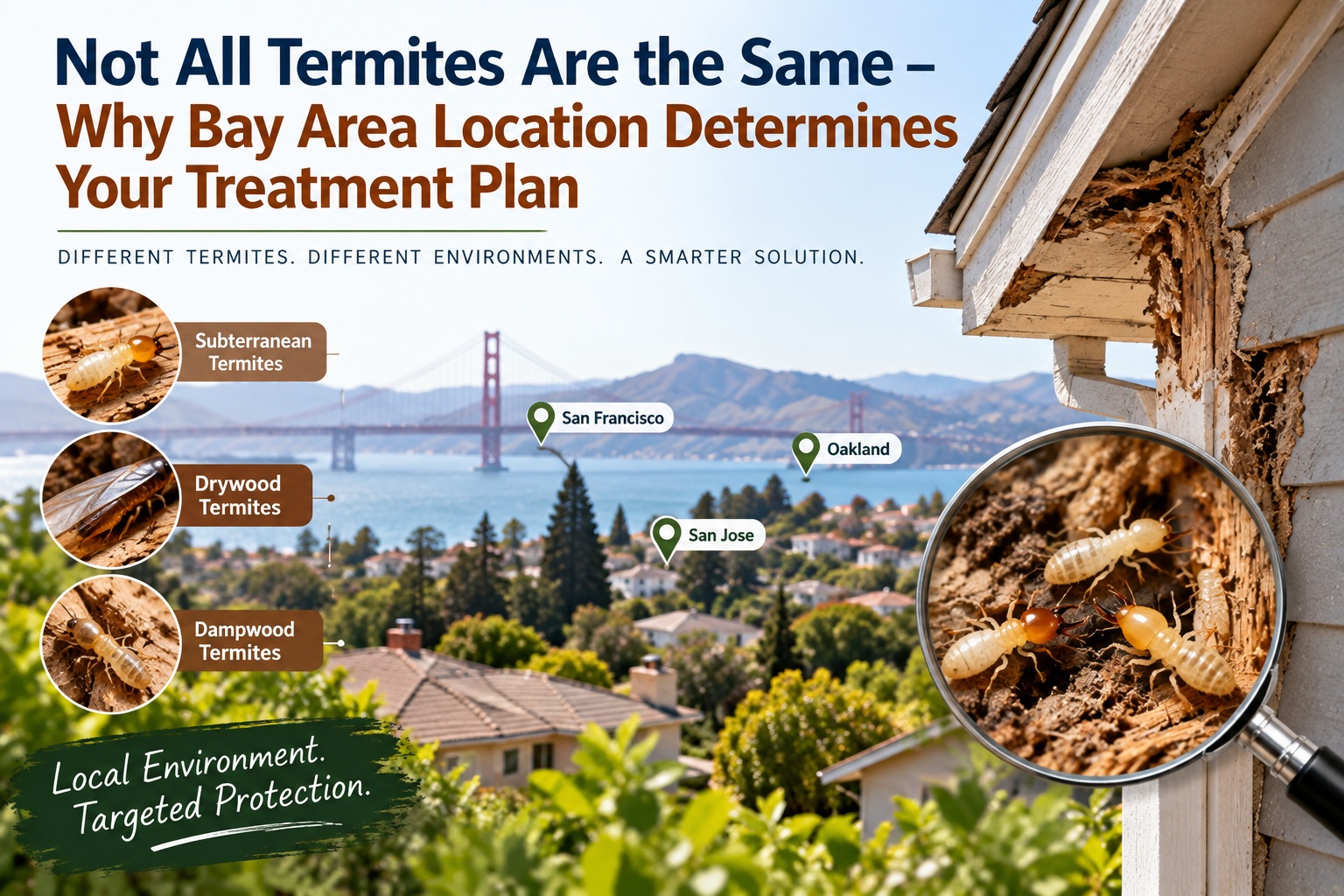 Two Bay Area homes just a few miles apart can have completely different termite problems. This is because the Bay Area isn't one climate. It's a patchwork of foggy coastlines, hot inland valleys, and mixed urban neighborhoods, and each environment favors a different type of termite.
Knowing which termite species is likely in your area is the first step toward choosing the right treatment.
Three Termite Types Call the Bay Area Home
Before location comes into play, it helps to know who you're dealing with. The Bay Area is home to three main termite types:
- Subterranean termites
- Drywood termites
- Dampwood termites
Why Your Neighborhood Changes the Risk
Because different termite species favor different environmental conditions, where your property sits in the Bay Area can provide clues about which termites may be a concern, but local conditions and the home's construction matter just as much.
Bay Area Type | Typical Climate | Termite Most Likely Present |
Coastal & fog-belt (SF, Pacifica, coastal Oakland) | Cool, humid, frequent fog | Dampwood termites; moisture-linked subterranean activity |
Inland valleys (San Jose, Pleasanton, Livermore) | Warm, dry summers, hot attics | Drywood termites; attic swarming in summer |
Mixed urban core (Santa Clara, central Oakland) | Moderate, older housing stock | Subterranean termites near foundations and aging wood |
Also Read: Understanding Termite Infestation Patterns in American Cities
What This Means for Your Treatment Plan
Treatment isn't one-size-fits-all, and the right approach depends heavily on which termite is present and how it's behaving in your home:
- Non-Fumigation Spot Treatment: Often effective for isolated drywood activity or limited subterranean activity found early, since the treatment can target the specific infested area.
- Fumigation (Tenting): Usually recommended when drywood termites have spread through multiple areas of the structure, since the pests are hidden deep inside the wood.
- Soil and Liquid Barrier Treatments: The standard approach for subterranean termites, since it addresses the colony's access point below and around the foundation.
- Moisture Correction and Localized Treatment: A key part of managing dampwood termites is eliminating the moisture conditions that allow them to thrive. Depending on the extent and location of the infestation, treatment may also involve removing or repairing infested wood and applying a targeted termiticide.
That's why a professional inspection matters more than a guess. Identifying the correct species first means your treatment plan actually solves the problem, instead of addressing the wrong risk. It also affects what your warranty should cover and how often follow-up inspections make sense for your specific property.
Not Sure What's Affecting Your Property?
Hi-Tech Termite Control has spent over 20 years inspecting and treating homes across the Bay Area, and we tailor every treatment plan to your home's specific location and risk. Contact us today at (888) 322-8889 or email us at info@hitechtermite.com to schedule an inspection.
Frequently Asked Questions
1. How does location affect termite treatment in the Bay Area?
Bay Area locations have different climates and environmental conditions, which can influence the termite species present and the treatment approach needed.
2. What types of termites are common in the Bay Area?
The Bay Area is home to subterranean, drywood, and dampwood termites. The species affecting a property depends on local conditions and the home's construction.
3. Which termites are common in coastal Bay Area homes?
Coastal and fog-belt areas can have dampwood termites and moisture-linked subterranean termite activity because of their cooler, more humid conditions.
4. Are drywood termites common in inland Bay Area areas?
Drywood termites can be a concern in warmer, drier inland areas. Local conditions, attic temperatures, construction, and other factors can influence the risk.
5. How do you know which termite treatment your home needs?
A professional termite inspection can identify the species, location, extent of activity, and contributing conditions before a treatment plan is recommended.
6. Why is a professional termite inspection important in the Bay Area?
A professional inspection helps identify the termite species and specific risks affecting your property, allowing the treatment and follow-up plan to be tailored to your home's needs.