
The Silent Spread: How Termites Move from One Home to Another in Dense Neighborhoods
- Apr 22, 2026
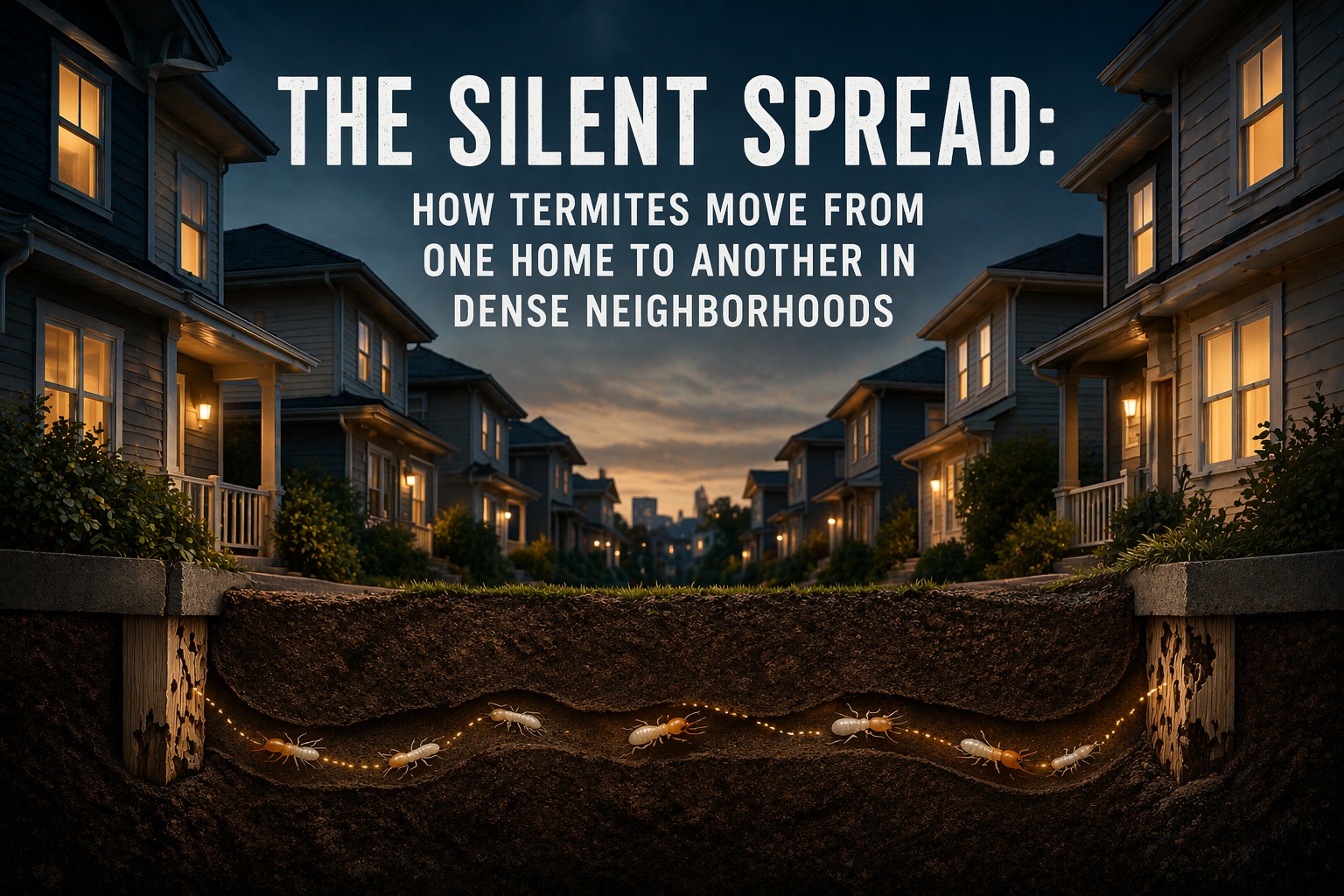 Imagine this: Your property is spotless, well-maintained, and regularly inspected. Yet somehow, termites show up.
No visible damage. No warning signs.
So, where did they come from?
Here’s the uncomfortable truth: Termites don’t respect property lines. In dense neighborhoods across the United States, they behave less like isolated pests and more like a connected underground network, silently expanding from one structure to another.
This blog breaks down exactly how that happens, why it’s accelerating, and what smart property owners must do to stay ahead and break this chain reaction.
How Do Termites Actually Move Between Homes?
1. Underground Highways (The Most Common Route)
Subterranean termites (the most destructive species in the U.S.) live in underground colonies that can stretch across several properties at once. They tunnel through the soil and are hence difficult to detect while traveling.
- The University of Florida IFAS Extension reports that a single subterranean termite colony can contain hundreds of thousands to millions of termites.
- These colonies can forage up to 150 feet or more from their nest in search of food.
- The U.S. Environmental Protection Agency (EPA) confirms that subterranean termites rely on soil contact and moisture to survive, which is why they spread easily through connected ground spaces.
That means your neighbor’s infestation could already be halfway into your property… without you knowing.
2. Colony Expansion (One Colony, Multiple Buildings)
As colonies grow:
- Worker termites expand outward in search of food
- New feeding zones = new buildings
- Large colonies can infest several properties at once
This creates what pest experts call a “shared infestation zone.”
Meaning: Treating one building alone may not solve the problem.
3. Shared Structures and Contact Points
In many neighborhoods, homes are indirectly connected through:
- Wooden fences
- Tree roots
- Decks and patios
- Utility lines
If termites infest one of these structures, they can easily migrate.
For example, a termite colony in a backyard fence can travel from one house to another without obvious signs of infestation.
4. Swarmers: The Airborne Threat
During mating season (typically spring and early summer), termite colonies release swarmers (alates), winged termites that fly off to start new colonies.
- Swarmers are attracted to light and often enter homes through windows or cracks
- They shed their wings after landing and begin new colonies
- One swarm can lead to multiple infestations in nearby homes
According to Penn State Extension, swarming is the primary way termites establish new colonies in previously un infested structures.
5. Human-Assisted Spread
Not all termite movement is natural.
Common ways humans unknowingly spread termites:
- Moving infested firewood
- Reusing old timber or furniture
- Transporting mulch or soil
- Using construction materials from infested sites
Research from the USDA highlights that transporting infested wood is a major contributor to the spread of invasive termite species across regions.
6. Landscaping That Connects Properties
Your landscaping might be acting as a termite bridge.
High-risk elements:
- Tree roots extending across properties
- Mulch beds touching the foundation
- Overgrown vegetation retaining moisture
- Wooden garden borders
Termites thrive in moist, shaded environments, making these perfect pathways.
Check This: How Landscaping Choices Can Accidentally Invite Termites into Your Home
Why Termites Thrive in Dense Neighborhoods
- Homes are closer together → shorter travel distances
- Landscaping overlaps (trees, fences, soil contact)
- Shared moisture conditions (irrigation, drainage)
- Similar construction materials
- Aging neighborhoods = older wood structures
Early Warning Signs That Spread May Be Happening
Termites are often called “silent destroyers” for a reason. The early signs of infestation are subtle, and by the time visible damage appears, colonies may already be well-established and possibly spreading.
Here are some early indicators that you should keep an eye out for:
Inside your home:
- Hollow-sounding wood
- Bubbling paint (resembles water damage)
- Discarded wings near windows
- Mud tubes on walls or foundations
Outside:
- Soft or damaged fences
- Tree stumps with tunnels
- Soil tunnels along the foundation
Important: Seeing swarmers indoors is often a sign that a colony is already nearby or inside.
New & Emerging Threats
1. Hybrid Termites Are Emerging
Scientists have confirmed that:
- Two invasive termite species in the U.S. are crossbreeding
- Result: potentially stronger, more resilient colonies
2. Climate Change Is Expanding Termite Territory
- Warmer temperatures are allowing termites to move further north
- Previously low-risk areas are now becoming active zones
3. Global Movement Is Accelerating Spread
A 2025 study found termites can spread via:
- Boats
- Shipping materials
- Urban transport systems
Termites are now a logistics problem, not just a local one.
How Termite Control and Preventive Treatments Stop the Spread
Professional termite control isn’t just about eliminating what’s already visible; it’s about breaking the entire lifecycle of the colony and preventing it from reaching (or returning to) your home. Modern termite treatments use scientifically tested methods like non-repellent liquid termiticides and baiting systems that termites unknowingly carry back to their colony, ultimately eliminating it at the source. According to guidance from the U.S. Environmental Protection Agency (EPA), these treatments are designed to create a protective barrier around your home or disrupt colony growth entirely, reducing the risk of reinfestation.
Preventive treatments go a step further. Even if your home isn’t currently infested, applying a soil treatment or installing monitoring stations creates a defensive zone that stops termites before they can enter. This is especially critical in dense neighborhoods, where nearby infestations can easily spread underground. Annual inspections combined with preventive treatments ensure early detection and long-term protection, essentially turning your home from an easy target into a dead end for termite activity.
Neighborhood-Level Prevention: The Missing Strategy
Termite control works best when entire neighborhoods act together.
Why:
- Colonies don’t respect property lines
- One untreated home can reinfest others
- Coordinated treatment reduces the spread risk
Smart steps:
- Communicate with neighbors
- Schedule inspections simultaneously
- Share information about infestations
HiTech Termite Control
Termites don’t wait, and in dense neighborhoods, neither should you. What starts next door can quietly become your problem before you even notice. The good news? With the right expert intervention, you can stop the spread before it starts. Partner with our termite control specialists at Hi Tech to protect your home, your investment, and your peace of mind—today and for years to come. Book your free estimate here.
Frequently Asked Questions
Can termites spread from one house to another?
Yes. Subterranean termites can travel underground across properties, while swarmers can establish new colonies in nearby homes. Infestations often spread silently in dense neighborhoods.
How far can termites travel from their colony?
Termites can forage up to 150 feet or more from their colony. Some super colonies extend even further, affecting multiple homes simultaneously.
Can my neighbor’s termite problem affect my home?
Absolutely. If your neighbor has an untreated infestation, termites can expand their territory and reach your property, especially if homes are close together.
Do termites fly between houses?
Yes. Winged termites (swarmers) fly during mating season to start new colonies. They can enter nearby homes through small openings.
How quickly can termites spread?
Termites spread gradually but consistently. A colony can expand its territory over months or years, often going unnoticed until significant damage occurs.
Are certain U.S. regions more vulnerable?
Yes. Termite activity is highest in:
- The Southeast (Florida, Georgia, Alabama)
- The Gulf Coast
- California
- Southern Texas
However, termites are active in almost every U.S. state except Alaska.