
Why New Construction Zones Often Trigger Nearby Termite Infestations
- May 21, 2026
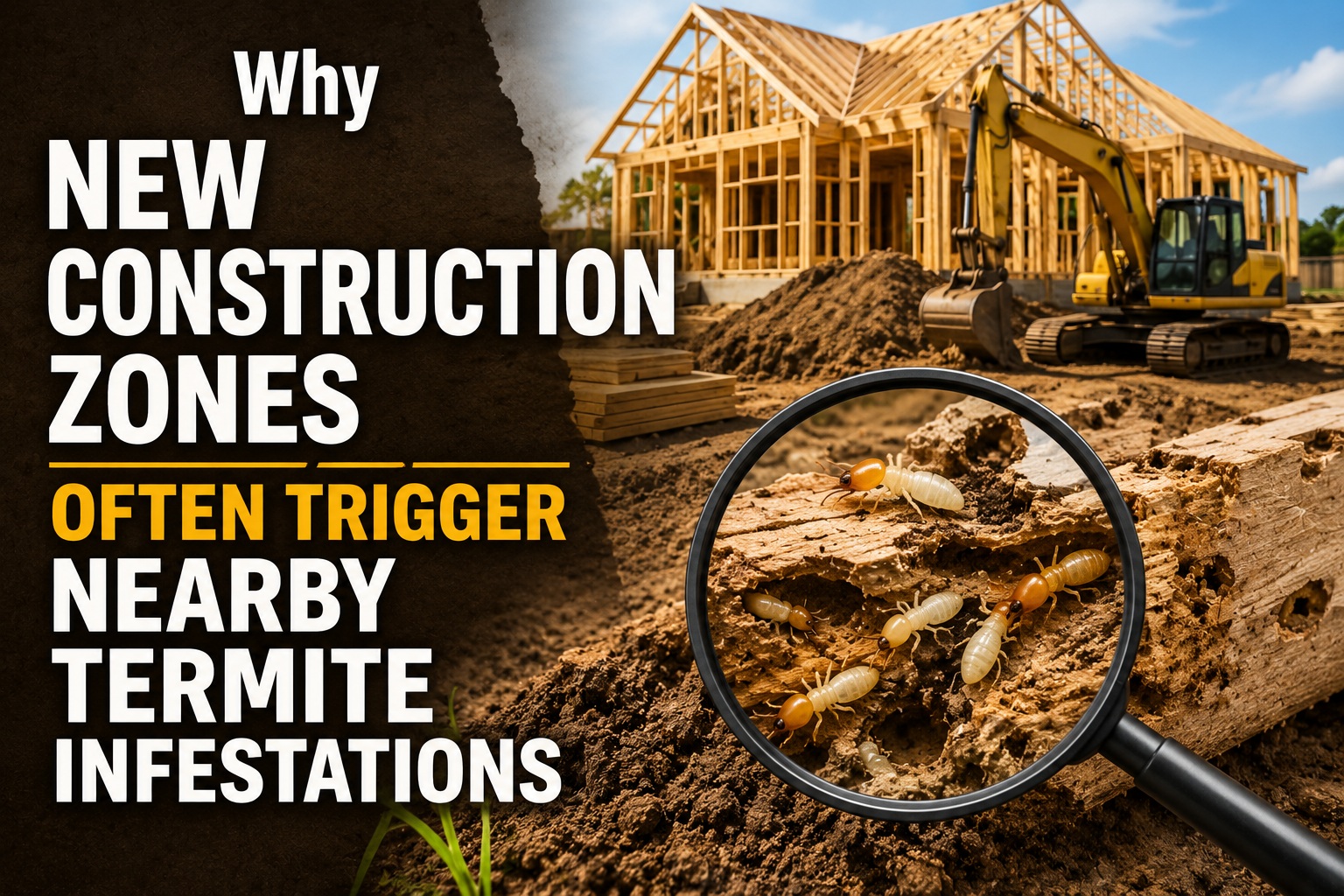 A new mall goes up. A housing development expands down the road. Construction noise fades… and a few months later, pest control calls start rising in the surrounding blocks.
Coincidence? Not really.
Across the U.S., pest management professionals have consistently observed a spike in termite activity around active and recently completed construction zones. The reason is rooted in termite biology, soil disruption, and environmental change.
If you run a business, own property, or manage commercial spaces, this is something you need to understand before it turns into a structural expense.
What Actually Happens When Construction Begins?
1. Soil Disturbance Forces Termites to Relocate
Termites, especially subterranean species like Eastern subterranean termites, live in highly organized underground colonies.
When construction starts:
- Soil is excavated
- Moisture gradients shift
- Colonies are physically disrupted
What do termites do?
They migrate, but they don’t go far. They move laterally into nearby structures.
According to research referenced by the National Pest Management Association, termite colonies can extend up to 300 feet from their central nest.
That means your building doesn’t need to be on the construction site to get affected.
2. Vibration and Noise Trigger Colony Stress Responses
Heavy machinery, drilling, and pile driving create persistent vibrations in the soil.
Studies in entomology show that termites are highly sensitive to vibrations since it’s part of how they detect danger.
What happens next?
- Colonies accelerate foraging behavior
- Worker termites spread out faster
- New feeding sites are established quickly
In simple terms, construction stress = faster infestation spread
3. Fresh Wood and Debris Act Like a Magnet
Construction sites often leave behind:
- Wood scraps
- Cardboard
- Buried cellulose materials
These become starter feeding zones.
Once termites establish activity there, they branch outward, often into nearby buildings.
The United States Environmental Protection Agency notes that cellulose-rich materials in soil significantly increase termite activity risk.
4. Moisture Conditions Change and Termites Follow Moisture
Termites thrive in damp environments.
Construction alters:
- Drainage patterns
- Irrigation flow
- Soil compaction
Water may start accumulating in new pockets, especially near foundations.
Research from the University of California Agriculture and Natural Resources highlights moisture as one of the primary drivers of termite survival and infestation intensity.
So, when moisture shifts, termites move toward it, and that often means nearby properties.
Also Read: Why Termites Target ADUs
Why Small Business Owners Are Especially Vulnerable
If you run:
- A retail store
- A restaurant
- A warehouse
- A medical or office space
You likely have certain factors that increase termite risk:
- Wooden fixtures
- Storage areas
- Hidden structural elements
And here’s the problem: commercial buildings often detect termite activity later than homes.
Why?
- Less frequent detailed inspections
- Focus on operations, not structure
- Large floor areas = harder to monitor
By the time signs show up, the damage is already underway.
What Recent Industry Observations Are Showing
Recent pest control industry reports (2023–2025) highlight a pattern:
- Urban expansion zones show localized spikes in termite service calls
- Warmer temperatures (linked to climate trends) are extending termite activity seasons
- Construction-heavy regions report increased infestations in adjacent commercial strips
The National Pest Management Association has also emphasized that termite pressure is increasing nationwide, partly due to environmental and developmental changes.
What You Should Do (Before Termites Make the First Move)
Most infestations don’t start with something obvious-they begin quietly, often triggered by changes you didn’t even notice (like nearby construction). So, the goal here isn’t just prevention. It’s getting ahead of termite behavior before they redirect toward your property.
Let’s break this down into what actually works and why.
1. Schedule a Preemptive, Professional Inspection (Not Just a Routine Check)
If there’s construction happening nearby, don’t treat inspections as a once-a-year task. Think of it as a risk-triggered response.
A proper inspection should include:
- Foundation perimeter checks for mud tubes
- Crawl space and basement moisture readings
- Structural wood sounding (to detect internal damage)
- Identification of early swarm activity
The key shift here: Inspect when risk increases, not just on schedule.
2. Take Moisture Control Seriously
Termites don’t randomly choose buildings; they follow moisture gradients.
Construction nearby can:
- Alter water drainage patterns
- Increase soil compaction
- Create new damp zones
That means your building might suddenly become more attractive without any visible change.
Focus on:
- Fixing even minor leaks (pipes, HVAC units, irrigation lines)
- Ensuring gutters and downspouts direct water away from your property
- Eliminating standing water near foundations
Research from the University of California Agriculture and Natural Resources consistently identifies moisture as one of the strongest predictors of termite infestation.
3. Remove Anything That Feeds Them (Even If It Seems Harmless)
You’d be surprised how often infestations start with something small:
- A stack of cardboard boxes
- Wooden pallets touching soil
- Leftover construction debris
- Mulch piled against walls
These aren’t just clutter-they’re starter food sources.
Once termites establish themselves there, expanding into your structure becomes easy.
If it’s wood-based and near soil, it’s a potential invitation.
4. Eliminate Hidden Entry Points around Your Building
Termites don’t need a visible opening. They can enter through cracks as thin as 1/32 of an inch.
Construction vibrations nearby can:
- Widen existing cracks
- Shift soil pressure against your foundation
- Expose hidden access points
Pay attention to:
- Foundation cracks
- Gaps around plumbing and utility lines
- Wooden siding that touches the soil
- Expansion joints
Sealing these isn’t just maintenance; it’s cutting off access routes before they’re used.
5. Install a Preventive Barrier
Waiting until termites appear is like installing a security system after a break-in.
Preventive options include:
- Soil-applied liquid termiticides (create a chemical barrier)
- Baiting systems (eliminate colonies before they reach you)
These methods:
- Work silently in the background
- Target colonies before structural damage begins
- Provide long-term protection when maintained properly
The National Pest Management Association recommends proactive treatment in high-risk zones, especially near construction-heavy areas.
6. Increase Monitoring During High-Risk Periods
When construction is active nearby, your inspection frequency should go up, temporarily.
Other signs that might warrant frequent inspection cycles include:
- Swarmers (especially in spring)
- Discarded wings near windows or lights
- Mud tubes along walls or foundations
- Subtle wood damage in storage areas
For businesses, assign someone (facility manager or staff) to do quick visual checks weekly.
Conclusion
Nearby construction doesn’t just reshape buildings-it reshapes termite movement, often pushing colonies straight toward unprepared properties. Acting early is essential to avoid costly structural repairs.
At Hi Tech Termite Control, we specialize in proactive protection-inspections, prevention, and long-term solutions tailored to high-risk zones. If development is happening near you, now’s the time to secure your property before termites make their move. To book your free estimate, click here.
Frequently Asked Questions
Q: Can nearby construction really cause termites to infest my building?
Yes. Soil disruption, vibration, and habitat loss force termite colonies to relocate-often into nearby structures within a few hundred feet.
Q: How far can termites travel from a disturbed site?
Subterranean termites can forage up to 300 feet, making nearby buildings highly vulnerable even if they aren’t directly adjacent to the construction site.
Q: Are new buildings themselves at risk, or just older ones?
Both. New buildings are vulnerable if:
- Soil wasn’t pre-treated properly
- Moisture control is poor
- Wood-to-soil contact exists
Older buildings are at higher risk if they lack modern termite barriers.
Q: What are the early signs of construction-related termite activity?
- Mud tubes along walls or foundations
- Hollow-sounding wood
- Discarded wings near windows or lights
- Sudden appearance of swarmers
Q: How soon after construction does termite activity increase?
It can begin within weeks to months, depending on:
- Season
- Soil conditions
- Colony size
Spring and early summer are peak swarm periods in most U.S. regions.