
Termite Damage vs. Water Damage: How to Tell the Difference Before It’s Too Late
- Dec 26, 2025
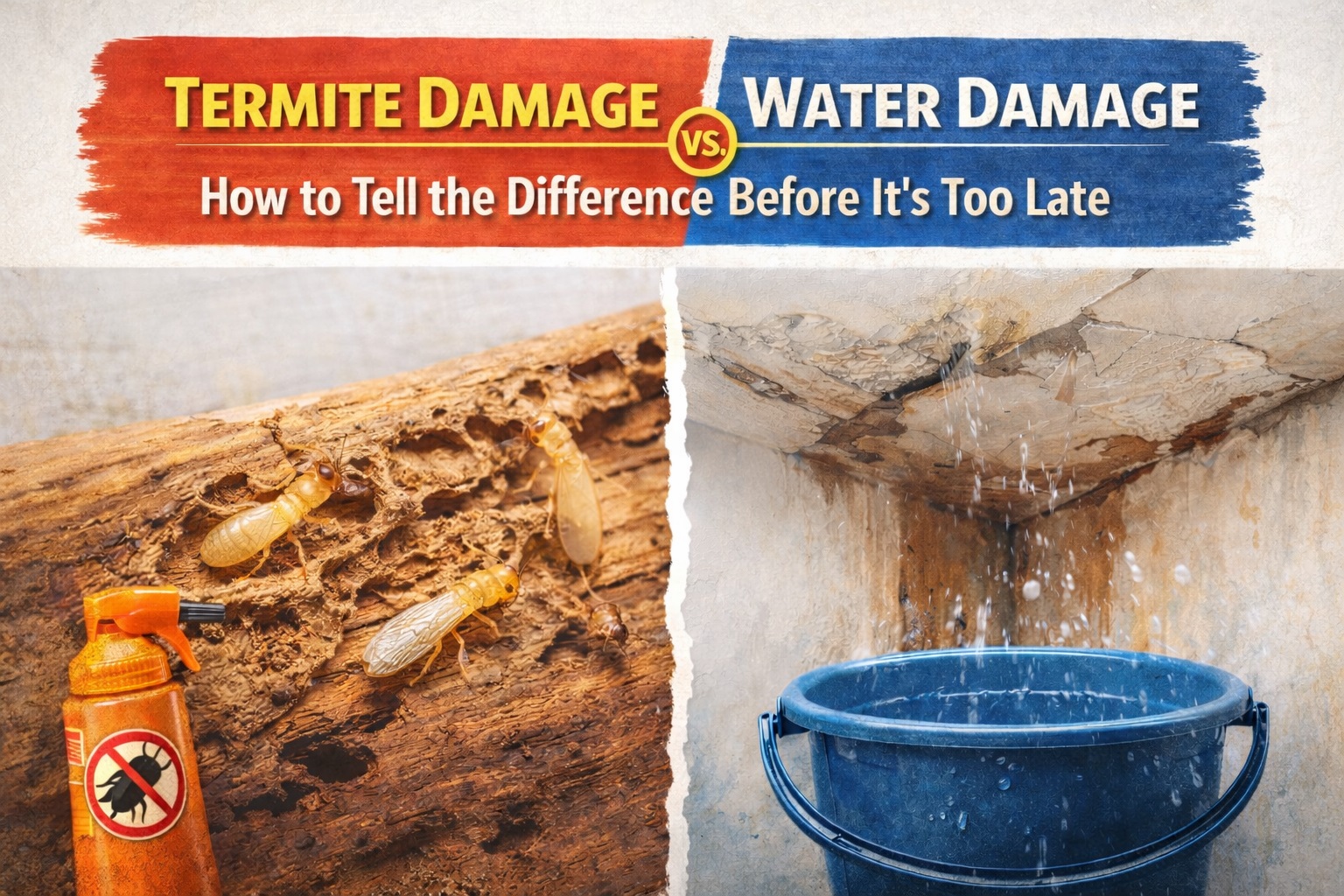 Termites damage approximately 600,000 homes in the United States each year, meaning more than half a million homeowners face costly repair and treatment work annually. Meanwhile, water damage and freezing are one of the most common homeowner-claim categories. In 2019-2023, about 1.5% of insured homes had this type of loss.
So, here’s the real question: When you see warped wood, bubbling paint, or stained drywall, how do you know what you’re dealing with, before the repair bill gets ugly?
Let’s break it down in a way that’s easy to spot, easy to remember, and easy to act on.
Why This Mix-up Is So Common
Have you ever looked at a swollen baseboard and thought that it’s probably a leak, only to find out later that it was termites?
Or noticed a brown ceiling stain and assumed termites were eating up there, when it was actually a slow drip?
That confusion happens because termite damage and water damage often show up in the same places:
- Around windows and doors
- Near bathrooms, kitchens, and laundry rooms
- Along baseboards and floor edges
- In crawl spaces and basements
Also, moisture makes termite problems more likely because damp wood is easier for them to exploit, and plumbing leaks can create the perfect hiding points for the termites.
How Fast Damage Escalates
Water Damage Timeline
If damp materials are dried within 24–48 hours, in most cases, mold won’t grow, but beyond that window, risk rises fast.
Termite Damage Timeline
Termites don’t usually show up with dramatic signals. They work quietly often until the wood is already compromised. NPMA even calls them silent destroyers.
Both problems punish delay. Water invites mold and rot while the termites quietly weaken the structure.
Termite Damage vs. Water Damage: What It Looks Like in Real Life
1) Swollen or Warped Wood
Water damage tends to:
- Make wood swell outward
- Create a soft sponge feel
- Cause uniform warping near a known moisture source (like under a sink)
Termite damage tends to:
- Leave wood looking mostly fine on the surface, but hollow inside
- Produce thin, papery layers of wood (especially with subterranean termites)
- Make wood sound empty when tapped
Try this quick test: Knock on the area with your knuckle.
- Dull, hollow sound → suspicious for termites
- Heavy, wet thud → more consistent with water saturation
2) Paint That Bubbles or Peels
Water Damage Clues:
- Paint blisters near plumbing lines, showers and exterior walls after storms
- Peeling tends to be wider and more spread out, often with visible staining
Termite Damage Clues:
- Paint looks like it’s bubbling because termites create moisture pockets behind it
- Often appears around trim, window frames, baseboards, and lower wall areas
If peeling/bubbling is paired with mud tubes, termites move to the top of the suspect list.
3) Lines on Drywall or Walls
Water damage usually shows:
- Brown/yellow tea stains
- Rings or expanding blotches
- Sagging drywall/soft spots (especially ceilings)
Termites may show:
- Very subtle raised lines or ripples (tunnels close to the surface)
- Tiny pinholes (sometimes with debris)
Important: Drywall can hide both problems. If the wall feels soft and crumbly, you need to take a closer look—fast.
Also Read: Busting Termite Myths: What Bay Area Homeowners Still Get Wrong About Termite Control
4) The Dead Giveaways: What Only Termites Leave Behind
If you see any of these, don’t overthink it:
- Mud tubes (pencil-width tunnels along foundation walls or crawl spaces)
- Discarded wings near windowsills or door frames (swarmers)
- Frass (drywood termite droppings that look like tiny pellets or sawdust piles)
Those signs don’t come from water damage.
5) Smell and Feel Clues You Shouldn’t Ignore
Water damage often smells:
- Musty, damp, earthy (especially if mold is involved)
Termite damage might smell:
- Mildly musty too—but the bigger clue is texture:
- Wood that’s easy to puncture
- Trim that “gives” when pressed
- Floors that feel slightly bouncy in one spot
The Most Confusing Situations (And How to Call It Correctly)
Situation A: Your Baseboards Are Swollen
- If swelling is even and near a bathroom/kitchen wall → likely water
- If swelling is patchy, with soft wood or hollow sound → termites may be involved
Situation B: Your Floor Feels Uneven or “Springy”
- If there’s a history of leaks, flooding, or high humidity → water/rot/mold risk
- If it’s localized near exterior walls or supports → termite inspection is smart
Situation C: You See Damage Around Windows
- Water damage often comes with failed caulking and staining after rain
- Termites often show wavy paint, hollow trim, or wings nearby
Why Termite Inspections Are Crucial (Even When You Think It’s Water)
Water damage is visible sooner. Termite damage is often not. So, homeowners fix what they can see (a stain or a warped board) while the real structural issue keeps growing.
A professional termite inspection matters because it can reveal:
- Hidden activity inside walls
- Subterranean entry points
- Moisture conditions that attract termites
- Damage extent (cosmetic vs. structural)
And since termite damage is typically not covered by homeowners' insurance, inspections aren’t just good for the house - they’re financial self-defense.
Also Read: Understanding Termite Damage in Commercial Properties: Stats and Prevention Tips
Commercial Property Owners: Why the Stakes Are Even Higher
If you manage offices, retail, warehouses, or multi-unit buildings, the challenge isn’t just damage; it’s downtime, tenant complaints, compliance headaches, and reputation.
Termite control for commercial buildings isn’t the same as residential treatment. It often requires:
- Scheduled inspections that don’t disrupt operations
- Monitoring stations and documented reporting
- Targeted treatment plans for large footprints and shared walls
- Risk control around storage areas, loading docks, landscaping, and utility penetrations
Commercial properties also have a hidden risk multiplier: One ignored moisture issue (HVAC condensation, plumbing chases, restroom leaks) can quietly affect multiple zones.
What to Do When You Suspect Damage
If you suspect water damage:
- Stop the water source (shutoff valve, roof patch, appliance off)
- Dry fast—fans, dehumidifier, remove soaked materials
- Aim for that 24–48 hour drying window to reduce mold risk
- Document damage for insurance if applicable
If you suspect termites:
- Don’t disturb the area too much (it can hide evidence)
- Book a professional inspection ASAP
Ask for:
- Activity confirmation
- Species identification
- Treatment options
- Repair-risk areas and a prevention plan
- For property managers, build a proactive plan for termite control for commercial buildings
- If you’re considering coverage, compare plans that include a full-structure termite warranty and clear inspection requirements
Frequently Asked Questions
What’s the fastest way to tell termite damage from water damage?
Look for termite-specific signs (mud tubes, discarded wings and frass). If those are present, termites are likely. If the damage is near a known leak and materials feel wet or are swollen evenly, water damage is more likely.
Do termites cause water-like bubbling paint?
Yes. Termites can create tunnels and moisture pockets behind paint, causing bubbling that looks similar to water damage.
How long do you have to dry water damage before mold becomes likely?
Guidance commonly recommends drying damp materials within 24–48 hours to reduce mold growth risk.
Is termite damage usually covered by homeowners' insurance?
Typically, no. Termite damage is not commonly covered by homeowners' insurance.
Why get a termite inspection if I already found a leak?
Because leaks and damp wood can mask termite activity. A termite inspection can detect hidden infestations and structural weakening that isn’t visible from the surface.
What areas should be checked first for termites?
Common inspection hotspots include:
- Crawl spaces and basement rim joists
- Foundation edges and expansion joints
- Window/door frames
- Baseboards and trim
- Deck attachments and porch posts
- Any wood-to-soil contact
What’s different about termite control for commercial buildings?
Commercial programs often require documentation, scheduled monitoring, large-footprint coverage, and minimal operational disruption, plus targeted prevention around utility penetrations, storage areas, and landscaping.
Conclusion
When it comes to termite damage vs. water damage, the real danger isn’t just misidentifying the problem; it’s waiting too long to act. That’s why professional termite inspections and timely treatments are not optional; they’re essential.
At Hi Tech Termite Control, we help property owners stay ahead of termite damage with:
- Comprehensive termite inspections that uncover hidden activity
- Effective termite treatments tailored to residential and commercial properties
- A 3-year full-structure termite warranty, that gives you long-term peace of mind—not just a temporary fix
- Specialized termite control for commercial buildings, designed to minimize disruption while maximizing protection
Schedule a termite inspection today by visiting our website here.